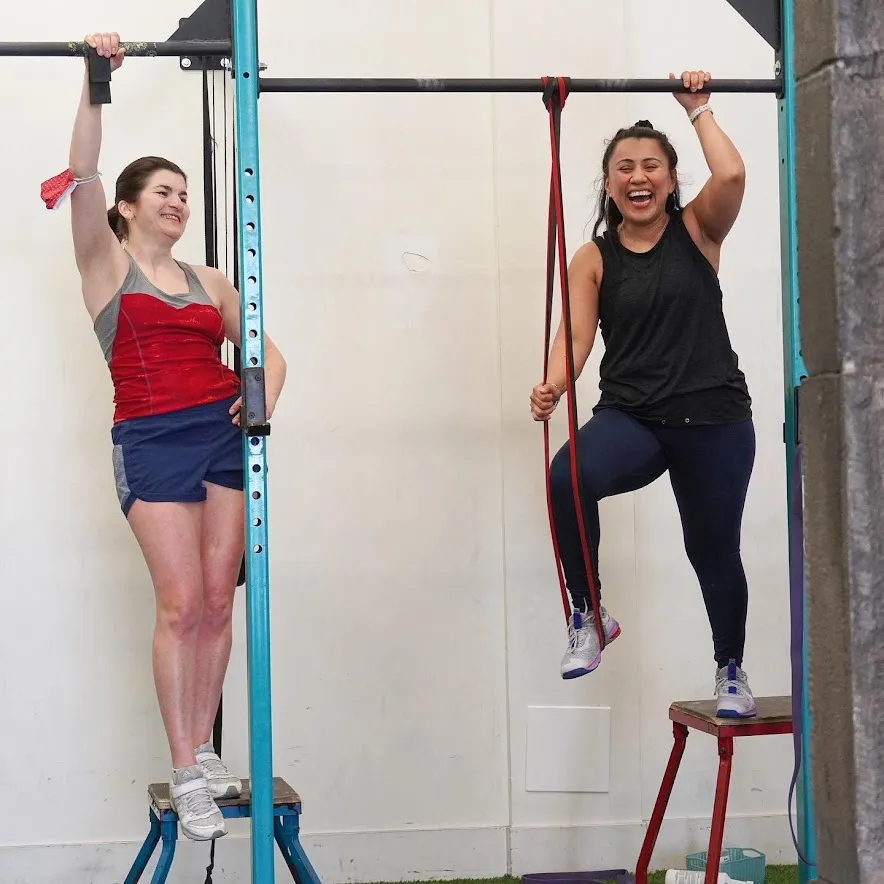

People talk about motivation like it’s a switch: you’ve got it or you don’t. In real life, nobody wakes up motivated every morning. The women who’ve trained for years just stopped waiting to feel like it before showing up.
If you’re starting again after a break, or juggling work, family, and everything else, here’s what actually helps. Nothing miraculous, just a few ways of working that hold up on the weeks when the urge doesn’t show.
Motivation rises and falls
Some weeks you’ll be keen to go. Others, every session will cost you something. That’s human. It says nothing about your discipline.
Trying to stay motivated all the time is how you set yourself up to quit at the first dip. What lasts is a practice that can survive the flat weeks. Consistency wins out over big January bursts sooner or later.
Start smaller than you think
We usually quit because we aim too big, too fast. Five sessions a week, the whole schedule redone, overnight. It holds for two weeks, then real life takes back over.
Two or three sessions a week is plenty to feel your energy and sleep shift. Start there. You can scale up once the habit is anchored. A small routine that sticks beats a big resolution that snaps after a month.
Book a fixed time in your week
“I’ll train when I have time.” That’s the sentence that guarantees you never go. You don’t stumble onto time: you reserve it.
Pick specific slots and treat them like an appointment you don’t move. Tuesday 6pm. Saturday 9am. Behavioural research points the same way: deciding the exact “when” and “where” ahead of time (the classic “if-then” plan) markedly raises your odds of following through. Once the session sits in your calendar, you stop renegotiating with yourself every time.
Clear the obstacles ahead of time
Every small obstacle between you and your session is an exit. Close them before they open.
Pack your bag the night before. Leave your shoes by the door. Book your class ahead so the commitment is made. The easier it is to start, the more likely you get there. It sounds like nothing, but on a Tuesday night when you’re wiped, that little detail is often what tips the balance.
Surround yourself with people who show up
Skipping a session gets a lot harder when someone’s expecting you. That’s the real strength of a small group: you become a face people know, and your coach calls you by name. Your absences get noticed, and so does your progress.
Being part of a community changes your whole relationship with training. On the days you’ve got nothing in the tank, that connection is often what gets you through the door.
Look past the scale
If your only marker is a number on a scale, you’ll lose heart fast. Track what’s actually moving instead: you lift heavier than last month, you climb the stairs without running out of breath.
Those small wins add up and give you a real reason to keep going. Your first assisted pull-up. The first time you add weight to the bar. That’s what progress looks like.
Go easy on yourself when you miss
You’re going to miss sessions. A crazy week, a cold, something unexpected. It happens to everyone.
The real trap springs afterward: deciding it’s all ruined and dropping the whole thing. One missed session doesn’t wipe out the ten before it. You pick up at the next one, without beating yourself up. Consistency over months is built right there, in the comebacks after the dips.
Remember why you started
On the days when nothing appeals, go back to your reason for starting. Rarely about looks. More often the wish to have energy for your kids at night, or just to feel steady through a heavy week.
That’s what brings you back, far more than pressure: what training leaves you with once you’ve walked back out of the gym.
Ready to show up?
The hardest part is walking through the door the first time. That’s exactly why we offer two free trials at MissFit Montréal, in our space at the Belgo building downtown, steps from the Place-des-Arts metro.
Small classes, real coaches, no pressure. Come do one session and see how you feel walking out. Book your two free trials, we’ll take you where you’re at.
The link between a specific “if-then” plan and actually following through comes from psychology research: Gollwitzer and Sheeran, meta-analysis of 94 studies (2006).
Ready to try it?
The hardest part is walking through the door. Come try a session, no credit card and no pressure.